Last updated: October 7, 2026
Over 370 million metric tons of potatoes are harvested globally every year [5]. Yet, many East African farmers leave massive yields in the ground due to poor soil fertility management and inconsistent watering. Potatoes farming is the commercial cultivation of tuber crops that demands well-drained, slightly acidic soils and precise irrigation. Success requires planting properly sized, disease-free seed pieces and executing strict crop nutrition plans to maximize tuber bulk and quality.
Key Takeaways
- Maintain soil pH between 5.5 and 6.0 to maximize yield and suppress common scab [1].
- Cut seed potatoes to exactly 1.5 to 2.0 ounces and allow them to heal before planting [6].
- Apply 15 to 25 inches of water per season, avoiding stress during the critical tuber bulking phase [7].
- Split your nitrogen applications to promote early canopy growth without delaying tuber maturity [8].
- Implement a strict 3- to 4-year crop rotation cycle to manage soil-borne pathogens [2].
Soil Requirements for Potatoes Farming
Potatoes demand well-drained, loose soils with a slightly acidic pH between 5.5 and 6.0 [1]. Heavy, compacted soils restrict root expansion, suffocate the plant, and cause severely deformed tubers.
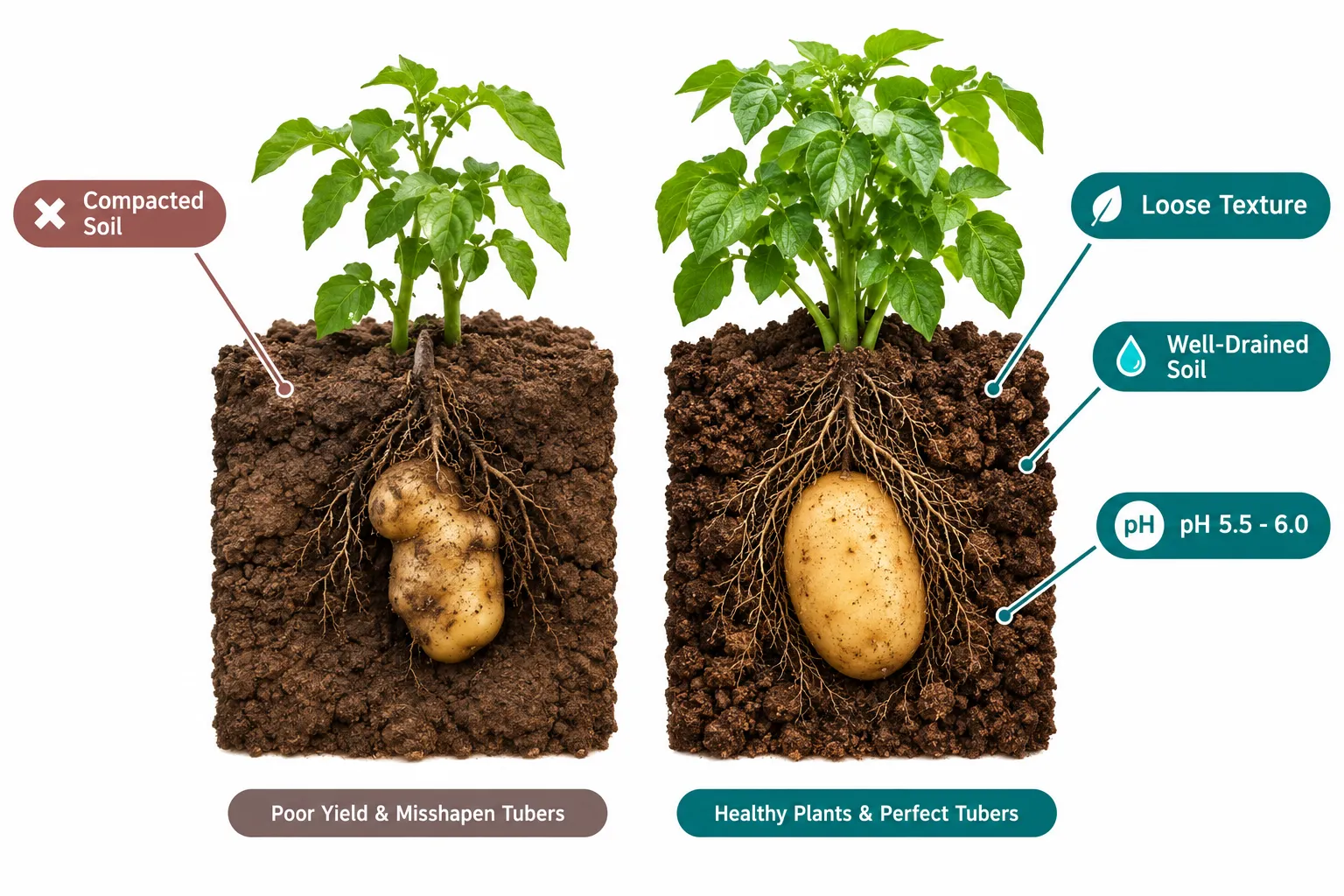
Maintaining this specific pH range is critical for suppressing common scab, a bacterial disease that degrades tuber quality and destroys your crop’s market value [1]. You cannot guess your soil’s acidity; you must measure it. Solomon Agri provides comprehensive soil testing to establish your baseline metrics. We build custom Farm Plans based on hard data. WhatsApp our experts today to schedule your soil fertility management assessment.
Seed Preparation and Planting Basics
Commercial potatoes are vegetatively propagated using cut seed potatoes rather than botanical seeds. For optimal emergence and yield, you must cut these seed pieces to weigh precisely between 1.5 and 2.0 ounces [6].
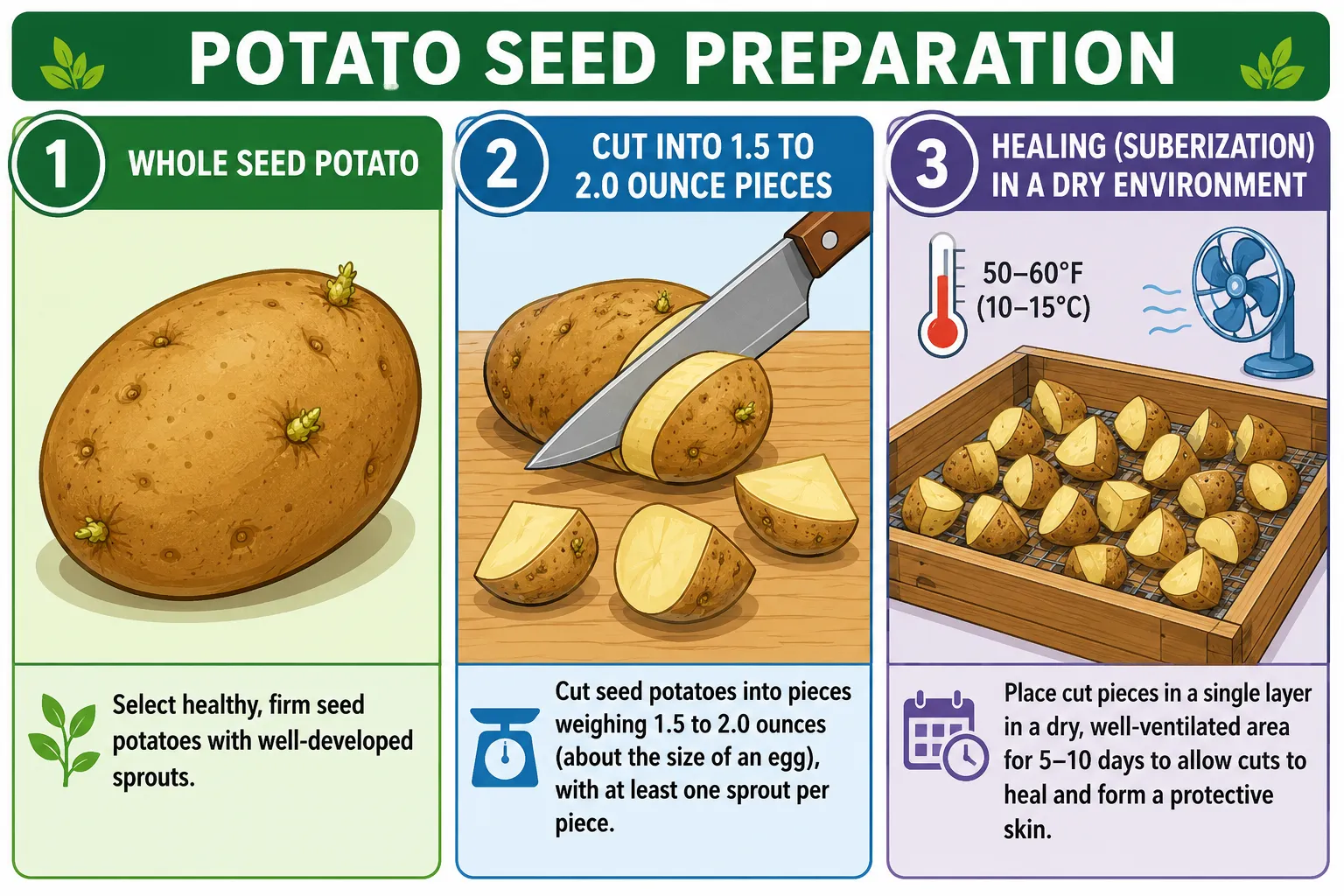
Once cut, you cannot plant them immediately. You must allow the pieces to heal, a process called suberization, before they go into the ground [6]. This healing phase creates a protective layer over the cut surface, preventing soil-borne rot and ensuring vigorous early growth. Never plant freshly cut, wet seed pieces into cold soil.
Irrigation Strategies for Potatoes Farming
Potatoes are highly sensitive to water stress and require approximately 15 to 25 inches of water per growing season [7]. Consistent soil moisture dictates your final tonnage and overall profitability.
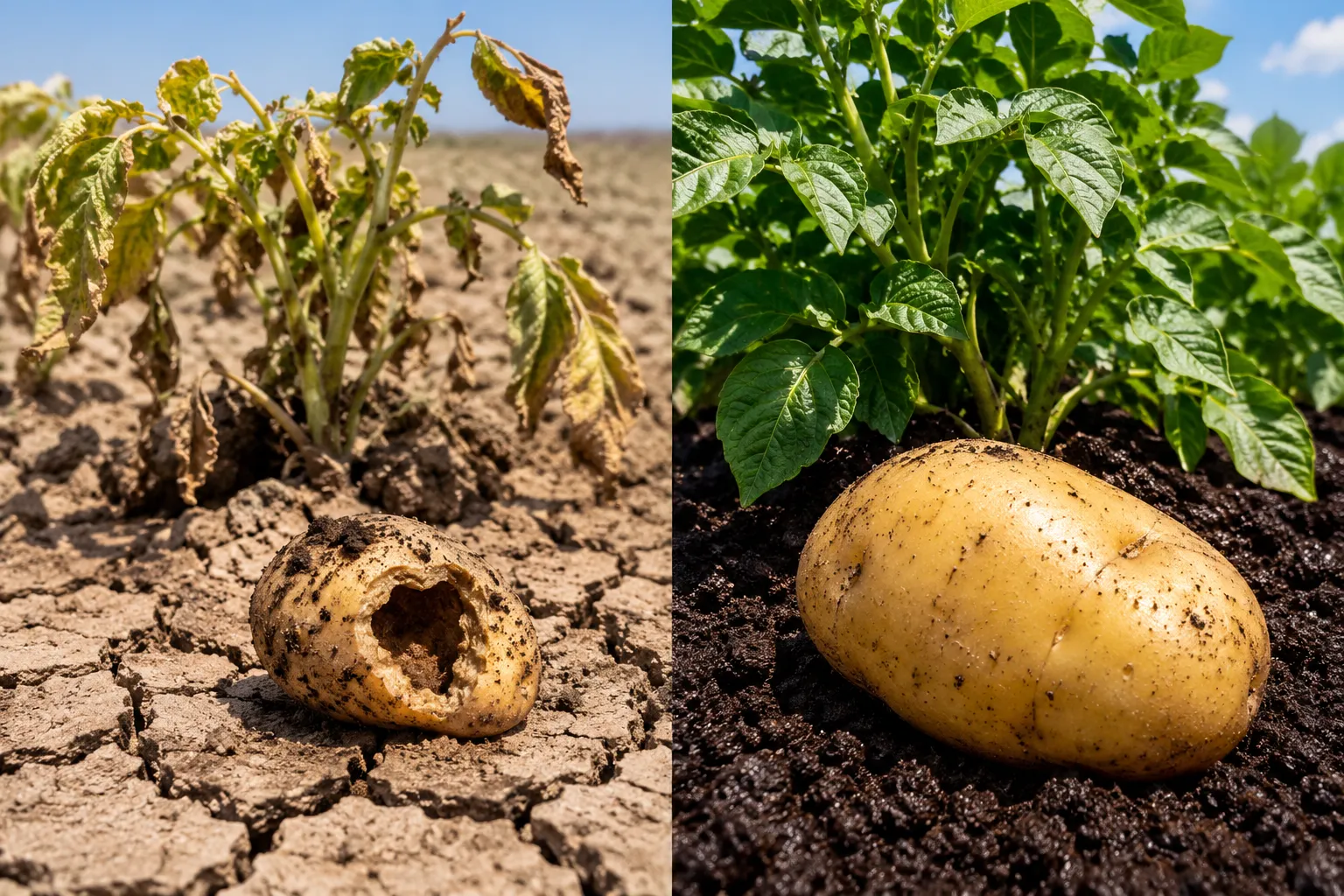
The most critical time for consistent watering is during tuber initiation and the bulking phase. Fluctuating moisture levels during these weeks cause severe malformations, hollow heart, and irreversible yield loss [7]. If you are relying entirely on unpredictable rain-fed systems, you are risking your harvest. Let’s chat about professional irrigation planning to keep your soil moisture dialed in from planting to harvest.
Crop Nutrition and Fertilizer Management
Nitrogen management is a delicate balance in potatoes farming. You need enough nitrogen early in the season for canopy growth, but excess nitrogen applied late delays tuber maturity, reduces specific gravity, and impairs skin set [8].
Split applications are the industry standard [8]. Apply a portion of your nitrogen at planting, and deliver the remainder during emergence and hilling. This prevents leaching, ensures the plant uses nutrients efficiently, and protects your tuber quality. Grow More. Lose Less. Farm Smarter.
Nitrogen Split Calculator
Calculate standard split applications for your potato crop.Total Target Nitrogen (kg/acre):Calculate Split
At Planting (40%): kg
At Hilling (60%): kg
Temperature Control and Tuberization
Potato plants form tubers best when soil temperatures sit between 60°F and 70°F (15°C to 21°C) [3]. Heat is the enemy of tuber development.
When soil temperatures exceed 80°F (27°C), tuber growth stops and physiological defects like heat necrosis begin [3]. East African farmers must time their planting seasons to avoid peak summer heat during the critical bulking phase. Use heavy mulching and proper canopy management to shade the ground and keep soil temperatures down if unexpected heatwaves hit.
Crop Rotation and Disease Prevention
To manage soil-borne pathogens like root-knot nematodes and early dying syndrome, you must implement a 3- to 4-year crop rotation cycle [2]. Planting potatoes in the same field year after year guarantees a buildup of destructive diseases.
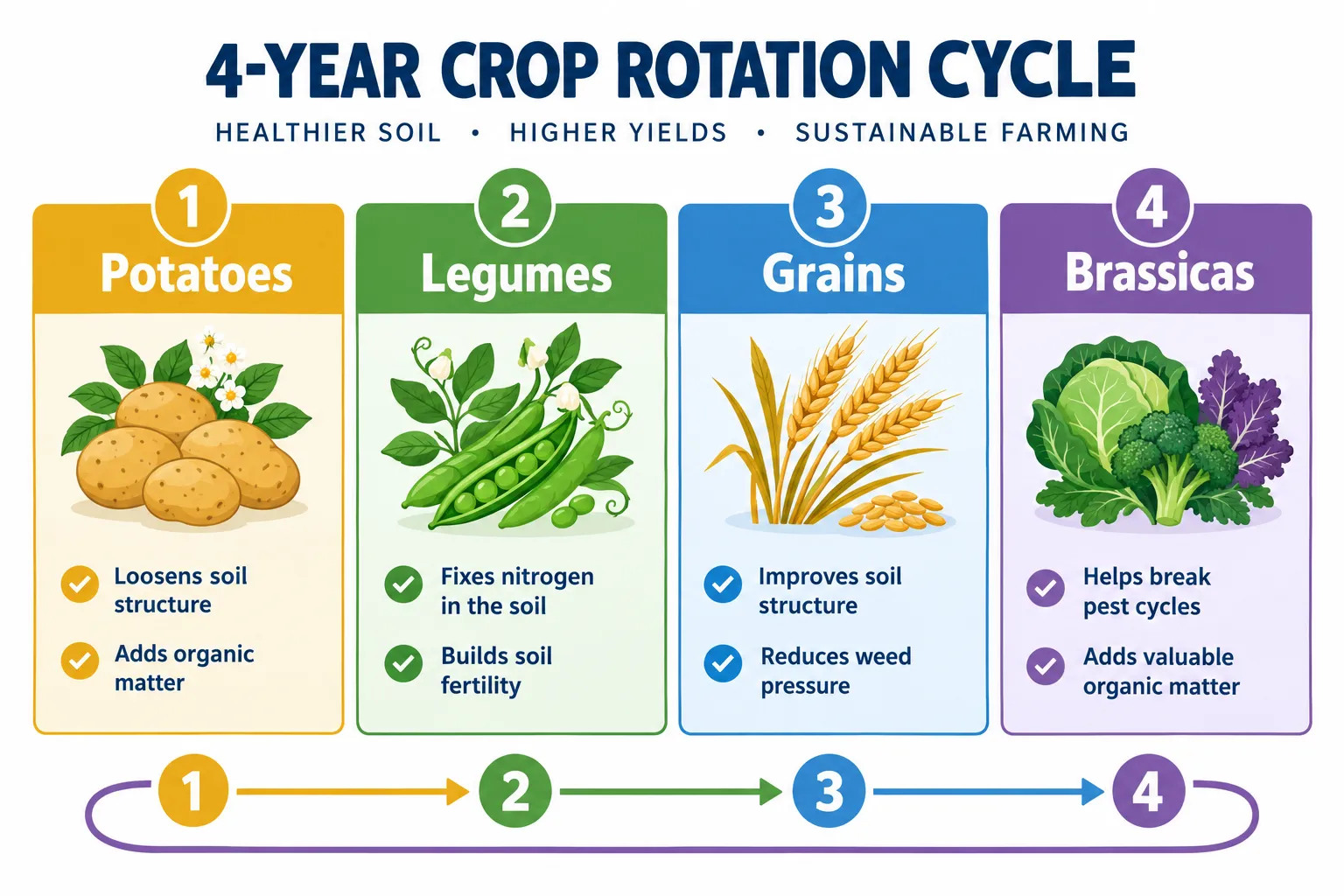
Strictly avoid consecutive plantings of potatoes or other Solanaceae crops, such as tomatoes or peppers, in the same field [2]. Always use certified disease-free seed to prevent Late Blight, a devastating pathogen that overwinters in infected tubers and cull piles. Proper Crop Care means rotating with grains or legumes to break the disease cycle and restore soil health.
Global Production and Market Trends
Globally, potatoes rank as the fourth most important food crop after rice, wheat, and maize, with worldwide annual production exceeding 370 million metric tons [5]. Expanding agricultural outputs in China and India heavily drive this global volume [5].
In the United States, Idaho and Washington consistently lead the nation, accounting for over 50% of the total U.S. crop annually [4]. Their success is driven by highly controlled irrigated farming systems. East African farmers can capture higher market value by adopting these exact commercial irrigation and agronomy standards. The market demand is there; your job is to deliver the quality.
FAQ
What is the best soil pH for potatoes farming?
The ideal soil pH for potatoes is between 5.5 and 6.0. This slightly acidic range maximizes nutrient uptake and suppresses common scab.
How much water do potatoes need?
Potatoes require 15 to 25 inches of water per growing season. Consistent moisture is especially critical during the tuber bulking phase.
How big should I cut my seed potatoes?
Seed pieces should be cut to weigh exactly between 1.5 and 2.0 ounces for the best emergence and yield.
What is suberization?
Suberization is the healing process where cut seed potatoes form a protective layer over the cut surface before planting, which prevents soil-borne rot.
Why should I split my nitrogen fertilizer applications?
Splitting nitrogen applications provides early nutrients for canopy growth while preventing excess late-season nitrogen, which delays tuber maturity and reduces quality.
How often can I plant potatoes in the same field?
You should only plant potatoes in the same field once every 3 to 4 years to prevent the buildup of soil-borne diseases and nematodes.
Conclusion
Potatoes farming is a highly profitable venture when executed with precision. By managing your soil pH, optimizing your irrigation during tuber bulking, and strictly following a 3- to 4-year crop rotation, you protect your investment and maximize your tonnage. Do not leave your yields to chance. Solomon Agri is here to provide the soil testing, crop nutrition, and agronomy advice you need to succeed. Grow More. Lose Less. Farm Smarter. Contact our WhatsApp Expert today to build a Farm Plan that works for your specific acreage.